
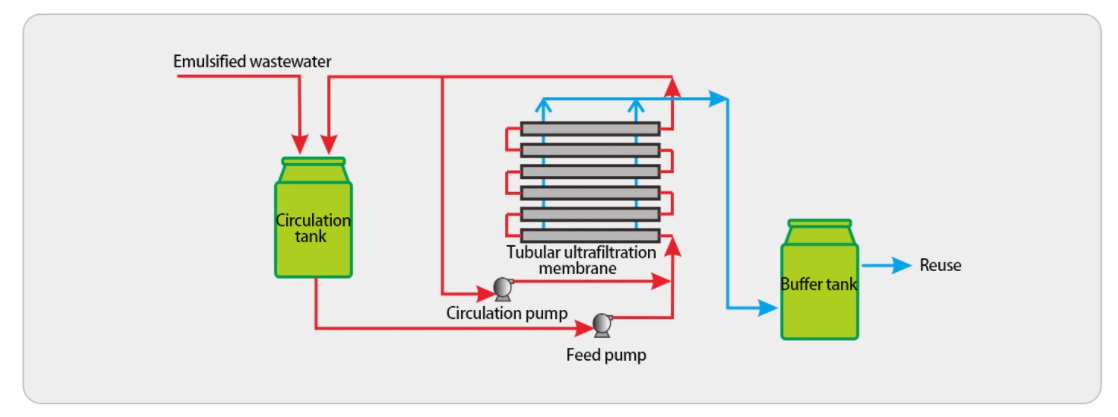
Metallurgical enterprises generate a large amount of oily emulsified wastewater during the steel rolling process, which mainly comes from salt and metal ion containing wastewater discharged after surface activation treatment or passivation of steel, and oily and fat containing emulsified wastewater discharged during annealing, pickling, cold rolling, grinding, leveling, cutting and other processes in cold-rolled stainless steel production. Among these wastewater, the treatment of cold rolling emulsion wastewater is the most difficult. General methods for treating oily wastewater include air flotation, adsorption, biochemical, chemical, etc., but they are all difficult to achieve ideal treatment results. Due to its unique performance, tubular membranes have shown strong competitiveness in the field of oily wastewater treatment, with advantages such as simple operation, high flux, and good oil quality for reuse.
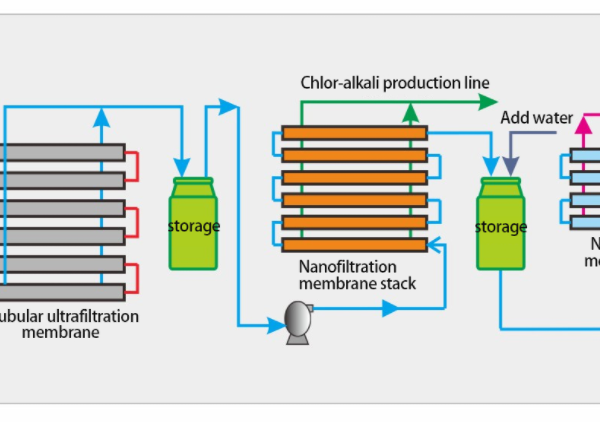
Membrane emulsification wastewater treatment process
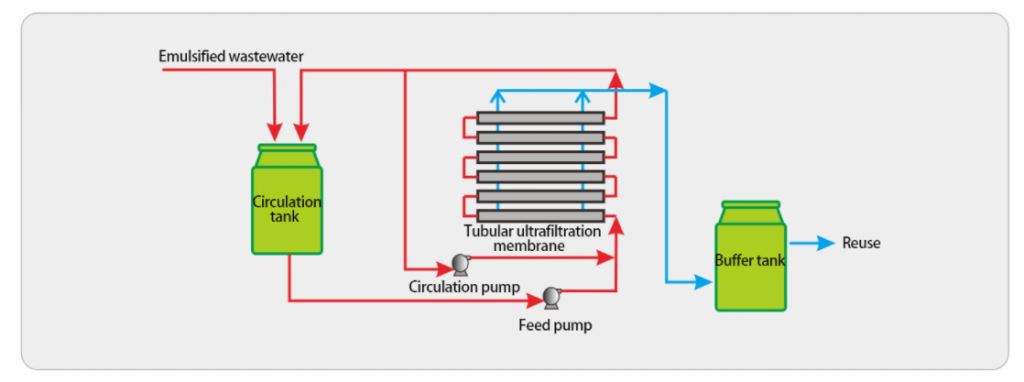
Advantages of membrane emulsification wastewater treatment
1. No need for chemical steps such as flocculation and neutralization, reducing secondary pollution
2. High oil retention rate, with an oil content of less than 10ppm in the effluent, meeting environmental protection requirements
3. After concentration, a large amount of valuable oil can be recovered; Strong anti pollution ability, good regeneration performance, can maintain high flux. 4. PLC upper computer control, simple and reliable operation, easy equipment operation and maintenance, low maintenance costs
 English
  العربية
  Français
  Deutsch
  Italiano
  Português
  Русский
  Español
  Nederlands